This is the most common question we get, and most answers online come from companies that only install one of the two. We install both, so here is the comparison without a thumb on the scale.
How they handle cracking
This is the real difference, and everything else follows from it.
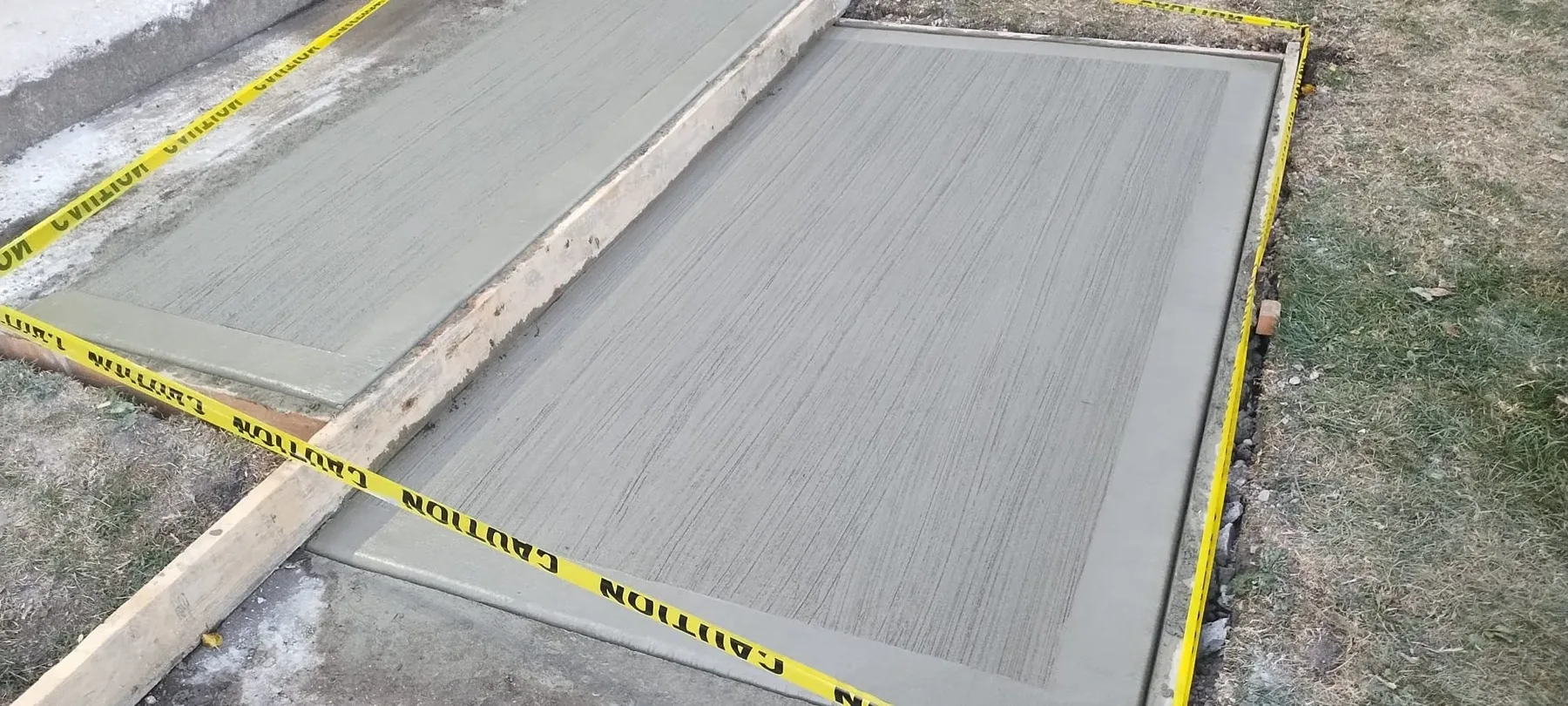
Poured concrete is one rigid slab. When the ground beneath it moves, the slab cannot flex, so it cracks. Good work manages this rather than pretending it will not happen: control joints are cut in so the concrete cracks along a straight, intentional line instead of wandering across the middle.
Pavers are hundreds of independent units. When the ground moves, they move relative to each other. Nothing cracks, because nothing is spanning anything. The trade is that they can go out of level instead.
Neither is immune to ground movement. They just express it differently.
How they get repaired
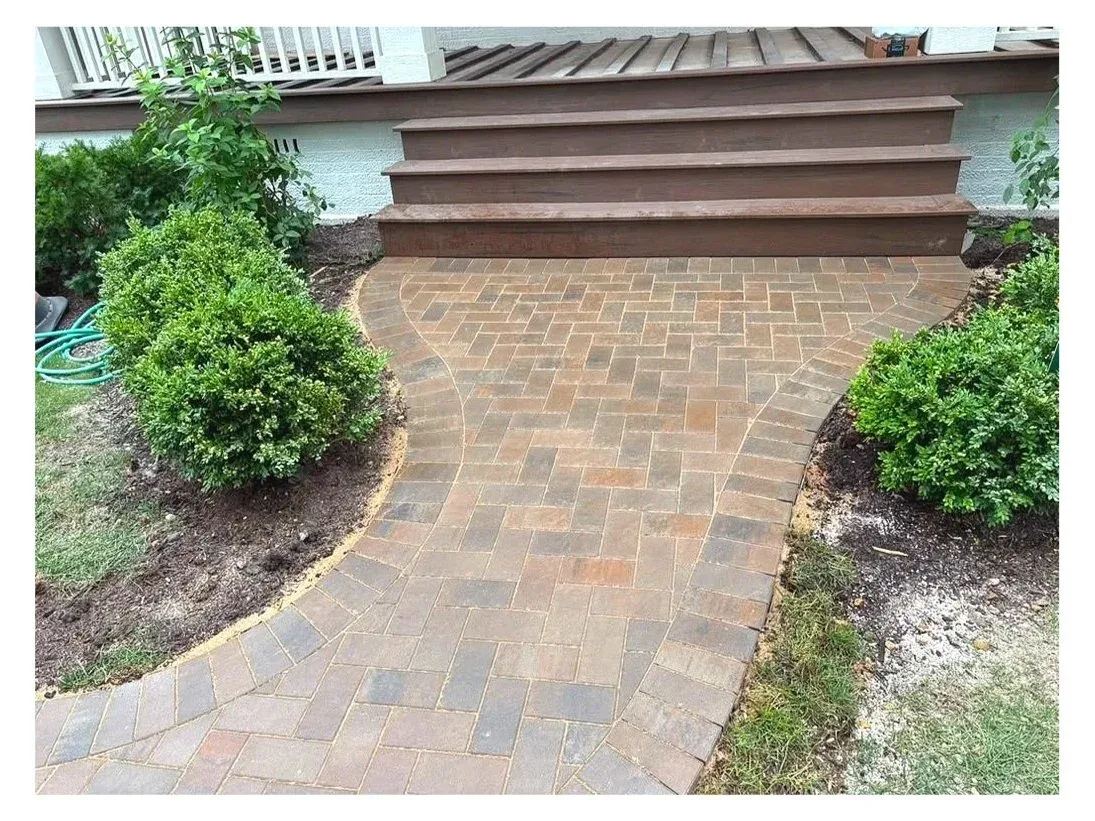
Pavers win here clearly. If a section settles, you lift those units, fix the base underneath, and set them back. The repair is genuinely invisible because you are reusing the same pavers.
Concrete does not repair well. A cracked slab can be patched, but the patch shows. Meaningful repair usually means breaking out and repouring a section, and the new pour will not match the colour of ten year old concrete.
Look
Pavers give you colour, pattern, borders, banding and edge detail. They read as a deliberate design element.
Concrete gives you a clean, continuous, uninterrupted surface. Broom finished for grip or troweled smooth. Some people want exactly that simplicity, and on a modern house it often looks better than pattern would.
Maintenance
Concrete asks less of you. Sweep it, and reseal occasionally.
Pavers have joints. Joint sand needs topping up every few years, and where sand thins, weeds find a way in. Not difficult, but it is not zero either.
Cost
Installed, pavers generally cost more than poured concrete for the same square footage, because there is more labour in setting individual units and building the base to receive them.
Where that gap narrows is over a long horizon. Pavers can be repaired unit by unit; a failed slab tends to be replaced wholesale.
What actually decides it
For most properties it comes down to three questions.
- How much does matching the look of the house matter? If detail and pattern matter, pavers.
- How much do you care about invisible repairs later? If a lot, pavers.
- Do you want the simplest possible surface at the lowest installed cost? Then concrete.
And one thing that is true of both: the base underneath decides how long it lasts. A cheap paver installation on a poor base will fail faster than a well built concrete slab, and the reverse is equally true. The material choice matters less than who builds it.
Panther Landscape and Concrete installs both across northern Illinois and southern Wisconsin. Tell us about the site and we will give you a straight recommendation, along with a free estimate.
Ready to Transform Your Outdoor Space?
Get a free consultation and estimate from a family operated northern Illinois and southern Wisconsin landscaping and concrete business.