Homeowners call about damp basements every spring, and the conversation almost always starts inside: a sump pump, a crack in the wall, a dehumidifier that runs constantly.
The more useful conversation usually starts outside.
Where the water actually comes from
A foundation is surrounded by soil. When it rains, that soil either sheds water away from the house or delivers it to the wall. Which one happens is decided entirely by the slope of the ground in the first several feet around the building.
If the ground slopes away, most rainfall leaves before it ever reaches the foundation. If the ground has settled and now slopes back toward the house, every rainfall is routed directly at the wall, where it soaks down and finds whatever path inside it can.
You can spend a great deal of money managing water on the inside. It is usually cheaper, and always more permanent, to stop delivering it in the first place.
Why the grade changes on its own
Nobody builds a house with the ground sloping toward it. It gets that way over time.
When a house is built, the soil backfilled around the foundation is disturbed. Disturbed soil settles, and it keeps settling for years. Newer builds are the most common offenders because the settlement is still in progress. Add landscaping installed on top of the settling backfill, a bed built up against the foundation, mulch topped up every spring for a decade, and the finished grade quietly reverses.
What to look for yourself
You do not need equipment to get a rough read.
- Walk the perimeter after a hard rain. Standing water against the wall tells you the answer immediately.
- Look at the downspouts. If they discharge within a foot or two of the foundation, they are concentrating an entire roof's worth of water in the worst possible place.
- Check for a trench. A visible low channel along the wall means soil settled and water has been running there long enough to shape it.
- Look at low spots out in the lawn. Ground that stays soft for days after rain is ground that is holding water rather than shedding it.
What regrading actually involves
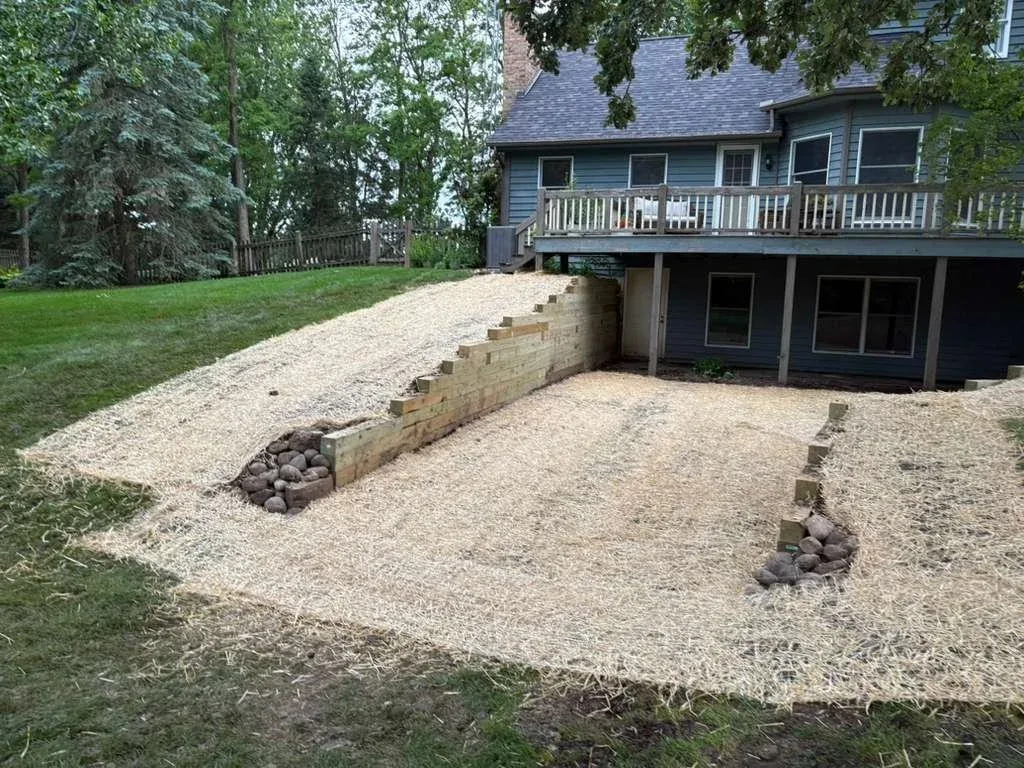
It is not glamorous. High areas get cut down, low areas get filled, and the whole surface gets reshaped so it runs consistently away from the building. Soil gets brought in or hauled off depending on what the site needs. Then it gets compacted, because a new grade that has not been compacted will settle and undo itself.
Done properly, the result is invisible. That is rather the point.
Do it before anything else
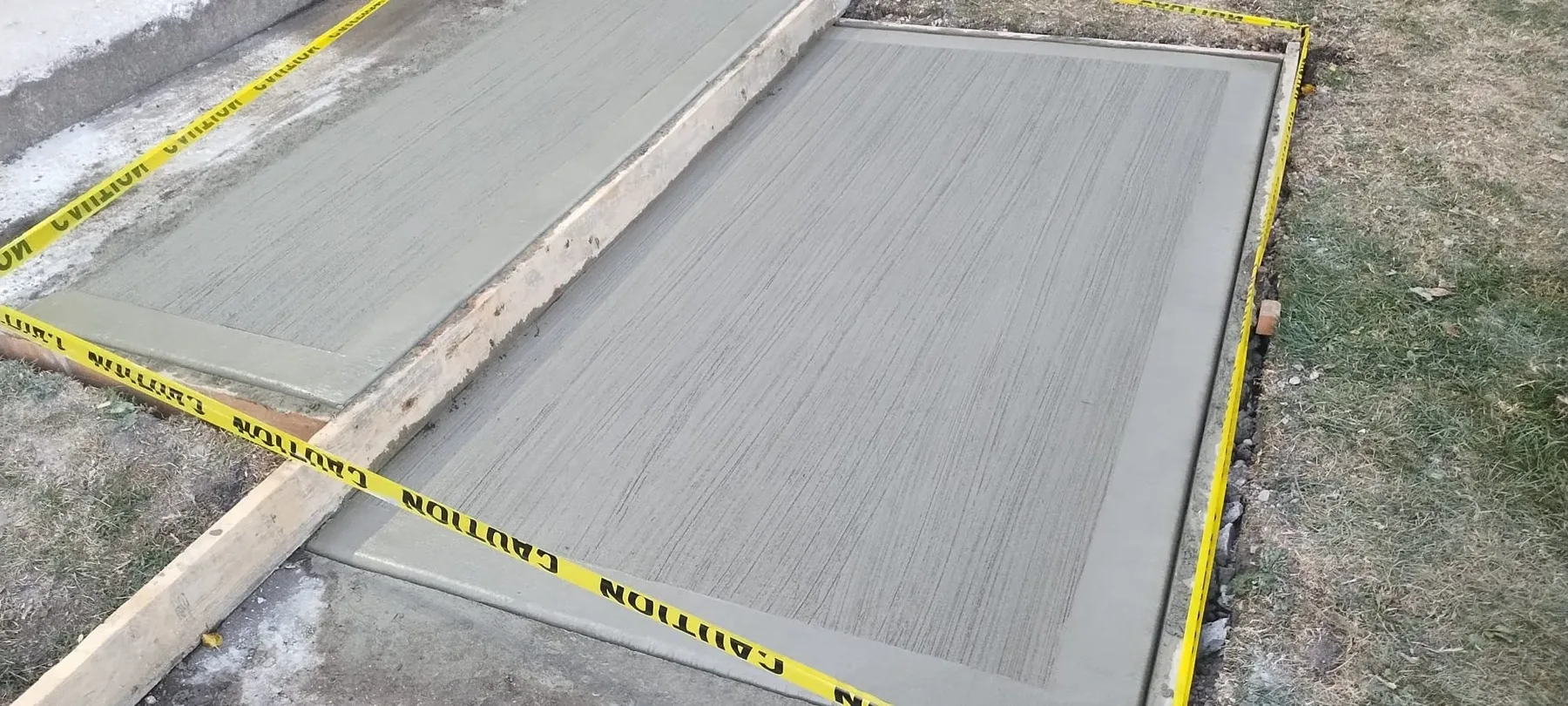
Grading is the one job that has to come first. Sod, a new patio, concrete flatwork and planting beds all sit on top of the grade and inherit whatever it does.
Lay sod over ground that pools water and you get a lawn with a permanent soft spot. Pour a patio before fixing the pitch and you have built a permanent obstacle in the path of the work. Redoing either one afterwards costs far more than getting the dirt right at the start.
If your yard holds water or your basement gets damp every spring, Panther Landscape and Concrete can come look at how the site drains. Consultations and estimates are free, across northern Illinois and southern Wisconsin.
Ready to Transform Your Outdoor Space?
Get a free consultation and estimate from a family operated northern Illinois and southern Wisconsin landscaping and concrete business.